
Real Estate Taxes in Turkey for Foreign Investors

+ Table of content
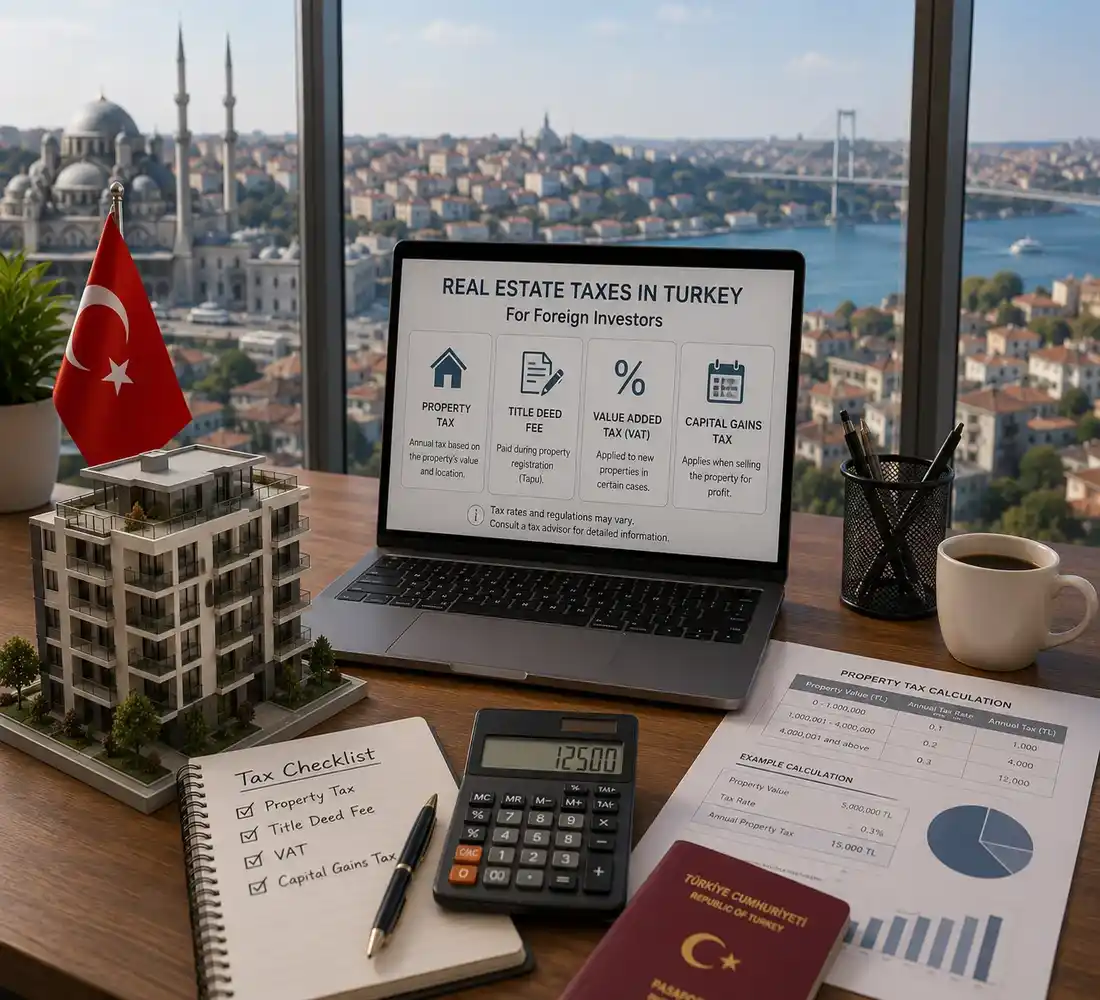
The topic of real estate taxes in Turkey for foreign investors is one of the most important aspects that international investors must understand before purchasing or owning properties in the Turkish market.
As Turkey continues to attract investors wishing to buy apartments, villas, and investment projects, learning about the real estate tax law in Turkey has become a fundamental step to determine the cost of real estate taxes in Turkey and to manage the investment legally and effectively.
This article covers all details related to real estate taxes in Turkey, starting from the property purchase tax in Turkey and title deed transfer fees, passing through the property ownership tax in Turkey and annual taxes, and reaching the property sale tax in Turkey and taxes on profits generated from resale. The article also clarifies the most important information regarding real estate taxes in Turkey for foreigners and the exemptions available to investors according to the current regulations for 2026.
Through this guide, Mbany Real Estate provides a clear vision regarding taxes on purchasing properties in Turkey and the fees and taxes of real estate in Turkey to help the foreign investor make well-studied investment decisions.
Real Estate Taxes in Turkey for the Foreign Investor Upon Purchasing the Property
The property purchase stage is one of the most important steps during which the foreign investor must understand all financial obligations associated with the investment. Real estate taxes in Turkey for the foreign investor include purchase and ownership transfer fees, as well as legal costs, which helps in financial planning and making a successful investment decision in the Turkish real estate market.
Property Purchase Tax in Turkey and Ownership Transfer Fees
When buying a property in Turkey, the foreign investor must know all the fees and taxes associated with the registration and ownership transfer process. The property purchase tax in Turkey is considered one of the most important initial costs paid upon completing the purchase, as it is usually 4% of the property value registered in the title deed (Tapu).
It may be split between the seller and the buyer at a rate of 2% for each party, or the buyer may bear it entirely depending on the agreement. Other costs include real estate appraisal, translation, and notarization fees, making financial planning an essential step before investing.
Property Transfer Tax in Turkey (Tapu Harcı)
The property transfer tax in Turkey, known as the Tapu tax, is one of the most important legal fees that the foreign investor must know when buying a property, as it is imposed to officially complete the ownership registration and transfer the property deed to the new owner. The value of this tax is usually 4% of the property value declared in the title deed, and it can be distributed between the seller and the buyer by agreement. It includes a set of basic procedures:
- Registering the title deed in the name of the new buyer.
- Officially transferring the property ownership from the seller to the new owner.
- Completing government procedures at the Tapu and Land Registry Office.
Taxes on Buying Properties in Turkey for Foreign Investors
There is no additional specific tax on foreigners when buying properties in Turkey. The foreign investor is generally subject to the same tax rules applied to Turkish citizens, with some procedural expenses associated with the purchase process that must be calculated within the cost of real estate taxes in Turkey to ensure proper financial planning. These include:
- Real estate appraisal fees to determine the official value of the property before completing registration procedures.
- Translation and notarization fees required for the official documents of the foreign buyer.
- Legal agency fees when hiring a lawyer to follow up on procedures and protect the investor's rights.
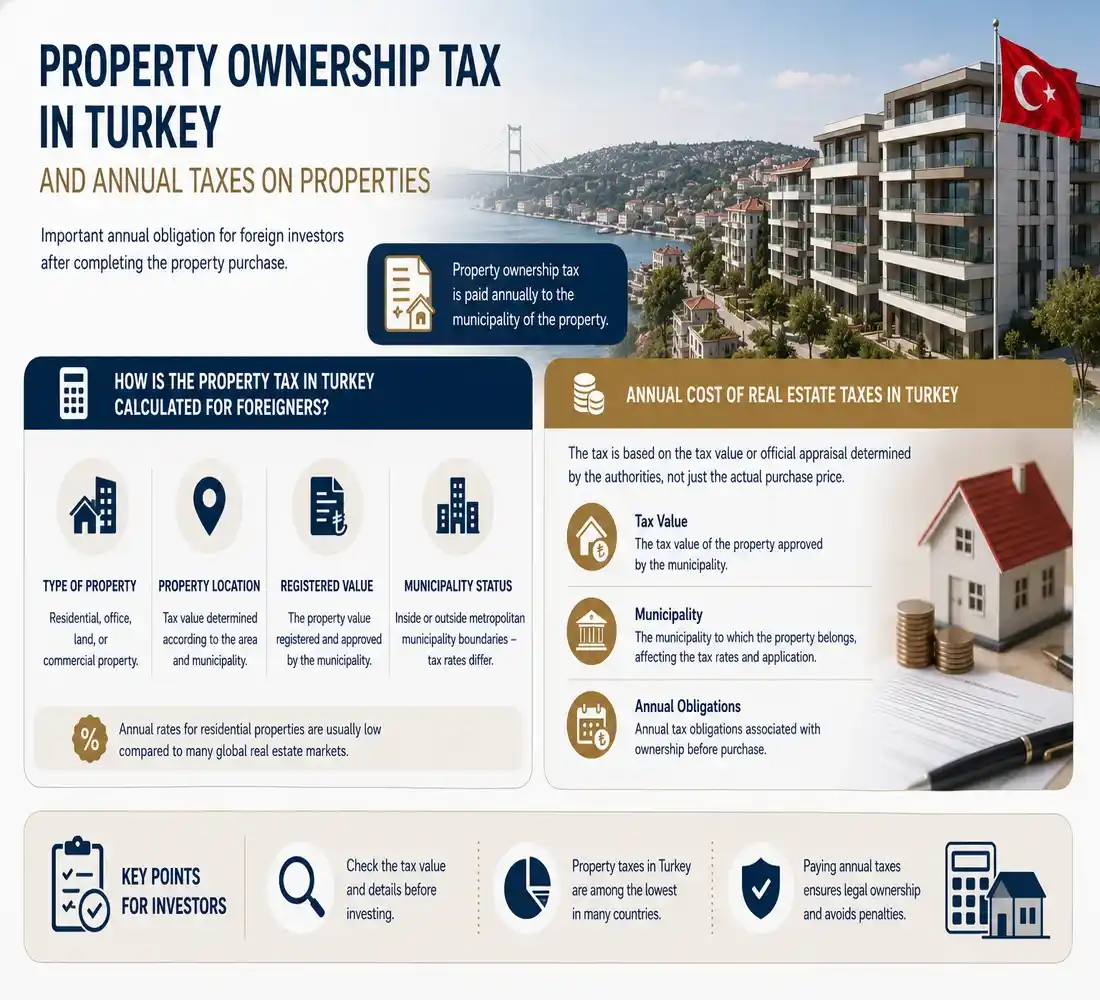
Property Ownership Tax in Turkey and Annual Taxes on Properties
The property ownership tax in Turkey and annual taxes on properties are important financial obligations that the foreign investor must know after completing the purchase process. Knowing these costs helps in determining future expenses and managing the real estate investment more efficiently, as the value of real estate taxes in Turkey varies depending on the property type, location, and the approved tax value.
How is the Property Tax in Turkey Calculated for Foreigners?
After completing the property purchase, the investor becomes responsible for paying the property ownership tax in Turkey, known as the annual real estate tax, which is paid to the municipality where the property is located. The value of annual taxes on properties in Turkey varies according to several main factors that affect the due tax value, including:
- The type of property, whether it is a residential apartment, office, land, or commercial property.
- The property location and the tax value determined according to the area and municipality.
- The property value registered and approved by the municipal authorities.
- Whether the property is located within the boundaries of a metropolitan municipality or outside it, as tax application rates differ.
Annual rates for residential properties are usually within low percentages compared to many global real estate markets.
Annual Cost of Real Estate Taxes in Turkey
The cost of real estate taxes in Turkey depends on the tax value or the official appraisal of the property determined by the competent authorities, not just on the actual purchase price. Therefore, the tax value may differ between cities, regions, and different properties. Verifying tax details before investing is an important step to avoid any unexpected costs. The most important points to review include:
- The tax value of the property approved by the municipality, based on which the annual tax is calculated.
- The municipality to which the property belongs, as it affects the application method and the specified tax values.
- Annual obligations associated with property ownership before completing the purchase process.
Looking for the best real estate investment opportunity in Istanbul?
We help you choose the right property based on your budget and goals
Income Tax on Properties in Turkey and Real Estate Capital Gains Tax
Income tax on properties in Turkey and real estate capital gains tax in Turkey are important financial aspects that the foreign investor must understand when generating income from renting or selling the property. Learning about these taxes helps in planning the real estate investment and determining the expected returns according to the real estate tax law in Turkey.
Income Tax on Properties in Turkey Upon Renting
If the investor rents out the property, the rental income may be subject to income tax on properties in Turkey according to Turkish tax laws. The tax obligation is determined based on the annual income value, exemptions, and allowable deductible expenses. Knowing these details helps the investor manage real estate returns legally. The most important influencing factors include:
- The total annual rental income generated from renting the property, which determines the extent of subjection to the tax declaration.
- Available exemptions that may reduce the value of the taxable income according to legal conditions.
- Deductible expenses that can be calculated when determining the net taxable income.
Real Estate Capital Gains Tax in Turkey Upon Selling
Real estate capital gains tax in Turkey is imposed when a profit is made from selling the property within a specific period according to Turkish legislation. The tax is calculated on the amount of increase in the property's value, not on the entire selling price. The value of the tax obligation varies depending on the duration of ownership and the value realized from the sale. The calculation process includes:
- The original purchase price of the property and the value registered upon ownership to determine the amount of capital gain.
- The final selling price of the property and calculating the difference between the purchase and selling prices.
- The duration of property ownership, as property sales within the first 5 years from the date of purchase are subject to capital gains tax rules according to Turkish legislation, while the treatment differs after this period.
- Legally approved increases, such as updating the purchase value according to recognized indicators before calculating the taxable profit.
Property Sale Tax in Turkey
The property sale tax in Turkey is known as the tax associated with the profits generated from reselling the property, and it is not a tax imposed on the selling process itself. It is calculated when capital gains are achieved according to Turkish legislation. Profits generated from selling the property within the first 5 years of ownership may be subject to tax, while profits may become exempt after exceeding this period according to legal conditions. The most important points to study include:
- The timing of the sale and the extent to which the duration of holding the property affects the tax obligation.
- The expected profit value after calculating the difference between the purchase and selling prices and the legal adjustments.
- Tax obligations and required procedures before completing the deal to avoid any unexpected costs.
Tax Exemptions for Properties in Turkey for the Foreign Investor
Tax exemptions for properties in Turkey provide important opportunities for the foreign investor to reduce some costs associated with buying and owning properties, according to specific conditions and controls within the real estate tax law in Turkey. Understanding these exemptions helps improve financial planning and maximize investment returns, especially when buying a new property or executing a long-term investment in the Turkish market.
Most Important Tax Exemptions for Properties in Turkey
Turkey provides a set of tax exemptions for properties in Turkey aimed at encouraging real estate investment and attracting foreign investors. These can be benefited from when specific legal conditions are met. These exemptions help reduce the cost of real estate taxes in Turkey and increase the attractiveness of the real estate market. The most prominent cases include:
- Some Value Added Tax (VAT) exemptions when buying new properties by foreigners under specific conditions, such as payment in foreign currency and transferring funds through the Turkish banking system.
- Exemptions related to the duration of holding the property, as the ownership period may affect tax obligations upon sale.
- Some facilities and incentives associated with qualified investment projects according to Turkish regulations.
Conditions for Benefiting from Tax Exemptions
Benefiting from tax exemptions for properties in Turkey requires adhering to a set of legal and procedural conditions aimed at regulating the processes of buying and owning properties by foreign investors. Fulfilling these requirements helps in obtaining tax benefits and reducing costs associated with real estate investment. The most important conditions include:
- Not having a previous tax residence in Turkey according to the cases specified by the legislation related to exemptions.
- Transferring funds from abroad when buying the property in some cases to benefit from the special exemptions for foreign investors.
- Adhering to the laws regulating real estate investment and registering ownership according to the approved official procedures.
Therefore, it is always preferable to consult a real estate or tax advisor before executing the purchase process. Check out the professional article that explains property ownership in Turkey with details of real estate fees and taxes in Turkey for foreign buyers, to know the real costs before and after purchase.
Table Illustrating the Most Important Real Estate Taxes and Fees in Turkey for the Foreign Investor
| Type of Tax or Fee | Description | Approximate Rate | Time of Payment |
| Property Purchase Tax in Turkey | Fees for registering the property purchase and completing the official ownership transfer procedures. | 4% of the property value declared in the Tapu. | Upon purchase. |
| Property Transfer Tax in Turkey | Tapu fees specific to changing the owner's name and officially registering the property. | 4% (Usually 2% on the buyer and 2% on the seller). | Upon property registration. |
| Property Ownership Tax in Turkey | An annual real estate tax paid to the municipality according to the property type and location. | Approximately 0.1% – 0.2% for residential properties (may vary depending on the case). | Annually. |
| Income Tax on Properties in Turkey | A tax imposed on rental income according to tax brackets. | From 15% to 40% depending on the annual income value. | According to annual income. |
| Real Estate Capital Gains Tax in Turkey | A tax on profits generated from selling the property during the taxable period. | Approximately 15% to 40% depending on the profit value. | Upon selling the property. |
| Property Sale Tax in Turkey | Associated with the profits generated from resale, not the full selling price. | Calculated according to income tax brackets on profits. | Upon realizing the profit. |
| Real Estate Fees and Taxes in Turkey | Includes government fees and associated services such as appraisal, translation, and notarization. | Varies depending on the procedure and required service. | According to the procedure. |
Frequently Asked Questions About Real Estate Taxes in Turkey for the Foreign Investor
+
Do foreigners pay higher property taxes than Turkish citizens? ?
No. Foreign investors are not subject to higher property taxes simply because they are foreigners. They are generally subject to the same property tax regulations that apply to Turkish citizens when buying, owning, or selling real estate.
+
How much is the property purchase tax in Turkey? ?
Turkey's property transfer tax is generally 4% of the property's declared value recorded in the title deed. By law, the tax is shared between the buyer and the seller, although the parties may agree on a different payment arrangement.
+
Are there annual property taxes in Turkey? ?
Yes. Property owners are required to pay an annual property tax to the local municipality. The amount depends on the property's type, location, and assessed taxable value.
+
Are there property tax exemptions for foreigners in Turkey? ?
Yes. Some foreign investors may qualify for specific tax exemptions if they meet the applicable legal requirements. Eligibility depends on factors such as the property type, purchase method, and the relevant regulations.
+
Is there a tax on selling property in Turkey? ?
Yes. Capital gains tax may apply if a property is sold during the taxable holding period under the applicable regulations. The tax treatment depends on how long the property was owned and the relevant legal provisions.
Conclusion: Guide to Real Estate Taxes in Turkey for the Foreign Investor
Familiarity with the details of real estate taxes in Turkey for the foreign investor is one of the most important factors that help achieve a successful and stable real estate investment within the Turkish market. By learning about the property purchase tax in Turkey, the property transfer tax in Turkey, and the property ownership tax in Turkey, the investor can determine the volume of expected costs and make financial decisions based on clear information.
Furthermore, understanding the income tax on properties in Turkey, the real estate capital gains tax in Turkey, and the property sale tax in Turkey helps in managing investment returns and planning for the future stage better. Knowing the tax exemptions for properties in Turkey and the real estate tax law in Turkey is a necessary step to benefit from the available opportunities and reduce unexpected obligations.
Through the experience of Mbany Real Estate, investors receive the necessary support and information to complete property purchase and ownership processes in Turkey in a safe and professional manner, starting from choosing the right property to managing all procedures associated with real estate investment.


 25-09-2025
 5,962
 10-11-2025
 4,585
 23-07-2025
 7,705